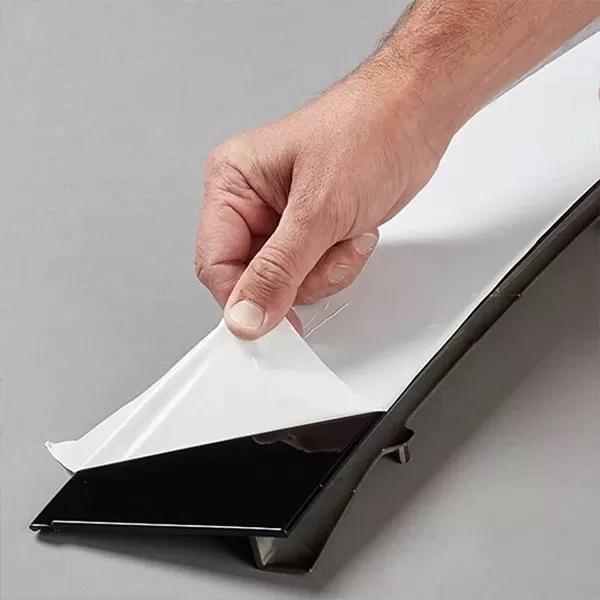
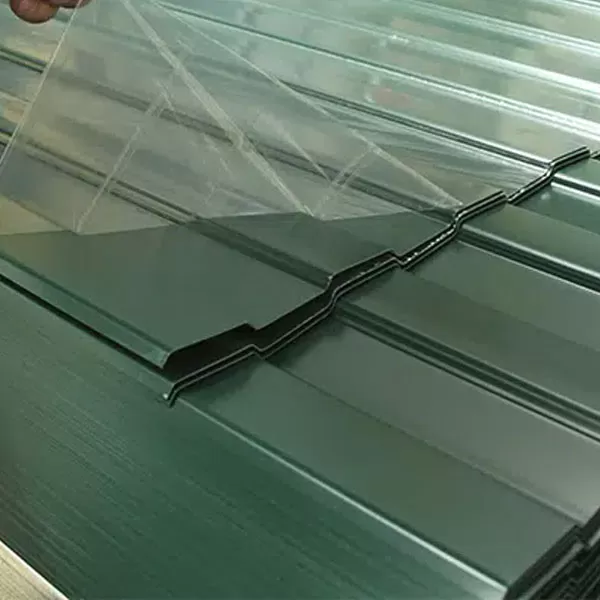
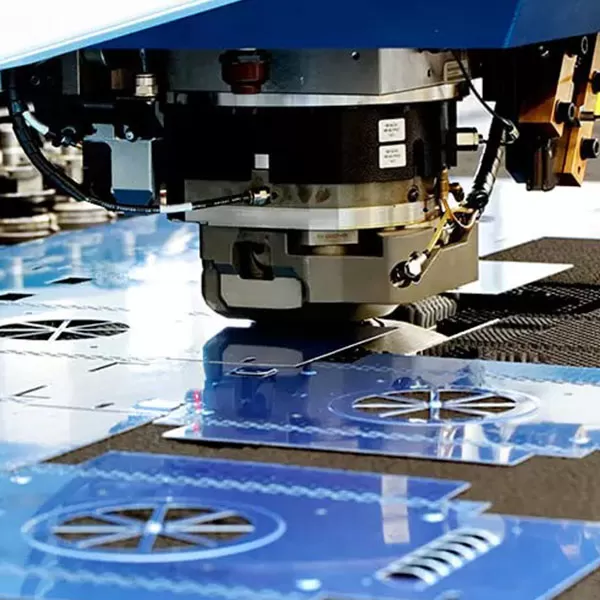
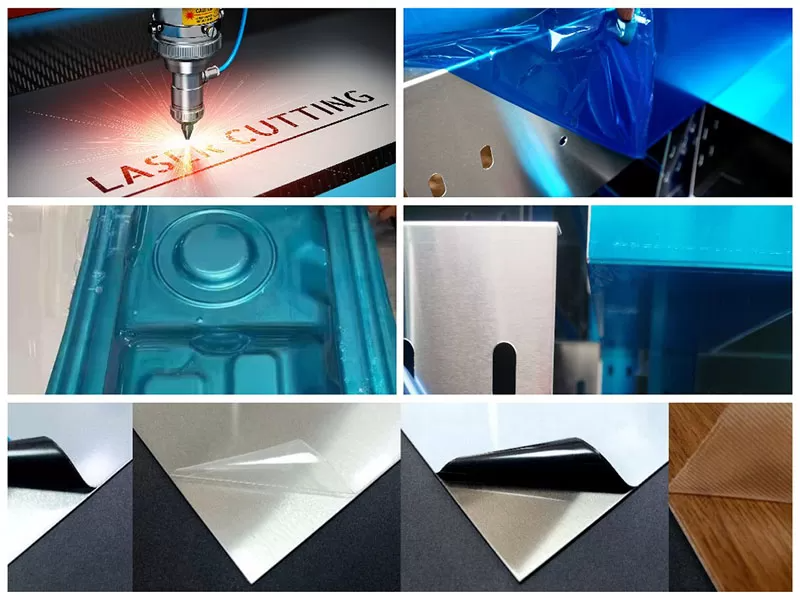
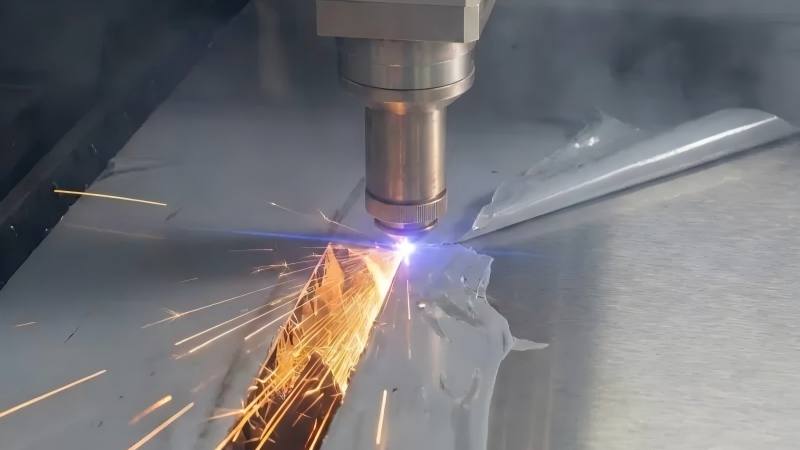
An appliance panel can pass through coil or sheet handling, stamping, bending, joining, subassembly, final assembly, testing, warehousing, and delivery before the customer removes its protective film. The film must protect the visible surface throughout this route without creating a new defect at removal.
Refrigerators, dishwashers, ovens, and laundry appliances also combine different finishes and materials. The approved film should be matched to each surface and process stage rather than standardized by color alone.
Some plants laminate film at the pre-coated or stainless-steel sheet supplier. Others apply it after forming or finishing. Removal may occur before final assembly, at the distribution center, or by the consumer. Each route creates a different dwell time and temperature history.
Donlee’s protective film for appliances should be specified against this complete route, including the exact panel finish and final removal point.
Scratches from racks, tools, fixtures, or adjacent panels
Abrasion during conveyor transfer and packaging
Metal chips or dust trapped under the film
Edge lift during bending or deep drawing
Heat exposure near curing, welding, or testing stations
Pressure marks or adhesive change during long storage
A thicker film may improve puncture resistance but can affect forming and removal. Higher adhesion may prevent lift but increase residue risk. The construction must address the dominant failure without creating another.
| Appliance surface | Key validation |
|---|---|
| Brushed or mirror stainless steel | Residue, optical marking, forming, and removal |
| Pre-coated metal | Coating compatibility, blocking, and color/texture change |
| Painted panel | Cure state, adhesion interaction, and gloss |
| Plastic trim or display | Stress, clarity, static, and low-residue removal |
| Glass | Clean removal, optical defects, and edge behavior |
Do not assume a film approved for stainless steel is safe on painted metal or plastic. Use separate approvals when surface chemistry or finish changes.
Surface cleanliness, lamination pressure, roller condition, web tension, and temperature influence bonding and wrinkles. Contamination trapped at lamination can become a visible defect after the film is removed.
Define the acceptable application window and monitor it. If panels arrive pre-laminated, agree on how the supplier controls surface preparation and film lot traceability.
Accelerated aging can screen heat and dwell risks, but final approval should include realistic storage and transport. Evaluate removal at low and high temperatures, different angles, and practical operator speeds.
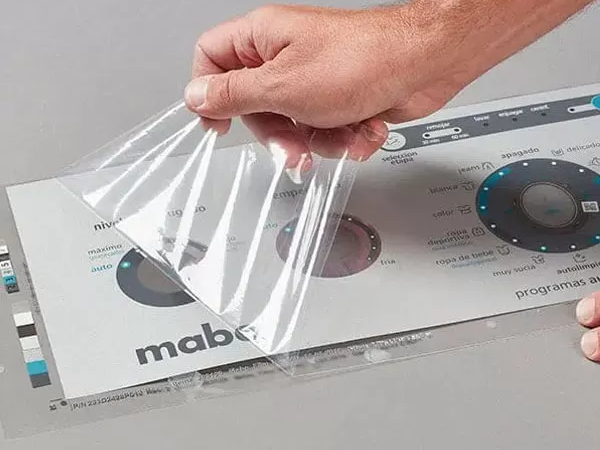
For consumer-removed film, consider a visible pull tab, removal direction, and printed instruction. The film should come off in manageable pieces without tools that could scratch the product.
Track edge lift, residue, tearing, scratches, bubbles, and wrong-film application by panel and process. A complaint code linked to film lot and appliance model helps separate material issues from lamination or handling issues.
When a change is made to paint, metal finish, curing, packaging, or film construction, repeat the relevant validation. Change control prevents a previously successful film from being assumed compatible with a new surface.
Usually not without testing. Stainless steel, painted metal, plastic, and glass can require different adhesion, base film, and removal behavior.
The removal point should be defined in the process. Some films are removed before assembly, while others protect through delivery. Longer dwell requires additional aging validation.
Possible causes include insufficient adhesion, poor conformability, contamination, excessive draw/bend severity, lamination conditions, or incompatible film stiffness.
List every substrate/finish, process step, heat exposure, forming severity, protection duration, removal point, panel size, annual usage, and quality requirement.
Donlee can support sample selection for appliance panels when the complete manufacturing route is provided. Validate each finish through forming, assembly, storage, shipping, and final removal before mass production.