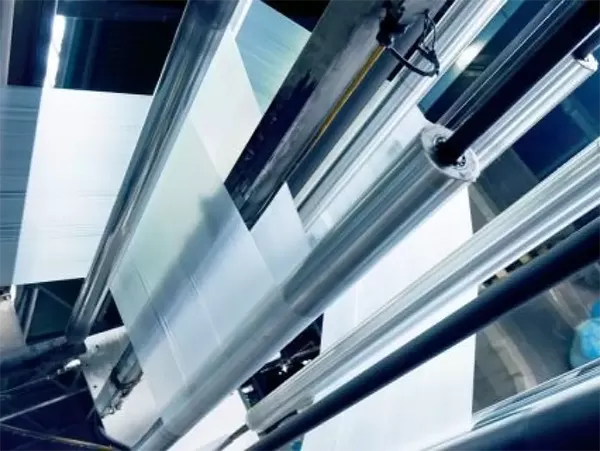
In stainless steel fabrication, surface damage isn't just cosmetic—it's rework, rejected parts, delayed shipments, and avoidable margin loss. The right protective film prevents scratches, scuffs, and adhesive marks through processing, handling, storage, and shipping—but choosing between PE and PVC film depends on how you manufacture.
At Donlee, we often describe protective film as the “Invisible Guardian” of the production lifecycle: it's a small material choice that protects a high-value surface at every touchpoint—from coil to finished product.
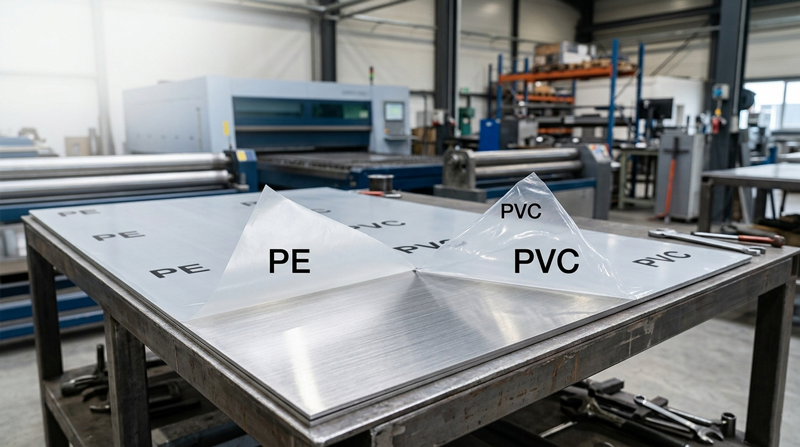
PE protective film for stainless steel is widely adopted because it's:
Lightweight and cost-effective for high-volume processing
Typically paired with water-based acrylic adhesives for clean removal
Halogen-free and commonly 100% recyclable (depending on adhesive system and local recycling streams)
For most stainless steel sheet protection needs—especially when a clean peel matters—PE is the default choice.
PVC protective film stainless steel applications still exist because PVC offers:
Exceptional elasticity (high elongation) for aggressive forming
Strong resistance to oils and many industrial contaminants
A “rubbery” conformability that can outperform PE in demanding shaping operations
PVC's strength is mechanical performance—but it comes with tradeoffs in residue risk, recyclability complexity, and laser suitability.
If your stainless process includes deep drawing, multi-stage forming, or highly contoured parts, PVC usually wins on pure stretch.
PVC advantage: Higher elongation → better for deep drawing protective film needs (e.g., sink bowls, complex press-formed shapes).
PE reality in 2026: Modern high-performance PE films can handle many forming tasks at a lower cost—especially when engineered with the right thickness and tack.
Procurement takeaway: If you’re tearing film during forming, don’t automatically “upgrade to PVC.” Often, the fix is a higher-grade PE (and the correct tack level) rather than changing polymer families.
The biggest long-term risk factor is not the film—it’s the adhesive behavior under time, heat, and UV exposure.
PVC challenge: PVC formulations may involve plasticizers. Under heat/UV, plasticizer migration can destabilize adhesion and increase the chance of ghosting (hazy marks) or residue—especially after long storage or hot-container shipping.
PE advantage: PE protective films are generally more stable for long storage and export when paired with properly engineered acrylic adhesive systems.
If “clean peel” is your #1 KPI, PE is typically the safer and more consistent choice.
Pro Tip (Donlee experience): In our 20+ years of manufacturing, we’ve found that adhesive ghosting on brushed stainless steel is most often caused by using PVC film in high-heat shipping containers. Switching to a UV-stabilized PE film usually solves this immediately.
More manufacturers are standardizing on PE because it is:
Halogen-free
Generally easier to recycle than PVC-based systems
Often aligned with supplier sustainability requirements and internal ESG reporting
PVC remains useful, but many global supply chains now prefer PE where performance allows—especially for high-volume appliance and sheet distribution.
It’s tempting to compare only material price, but the real ROI includes:
Scrap and rework avoidance
Line speed and uptime (peel performance, breakage, residue)
Storage/shipping risk
In most high-volume operations, PE delivers a better cost/performance ratio. PVC can be a smart investment when the forming process is so demanding that film failure creates expensive downtime or surface rejects.
Choose PE when you need predictable performance across handling and production:
General handling and transport (warehouse, fabrication shop, distribution)
Laser cutting film applications (fiber or CO₂) when using laser-grade PE specifically
Appliances (refrigerators, ovens, panels) where a clean peel and visual perfection are mandatory
Longer storage/export shipping where heat/UV stability matters
Choose PVC when mechanical forming performance outweighs other concerns:
Heavy-duty roll forming
Multi-stage deep drawing (e.g., stainless steel sinks and complex press work)
Harsher industrial environments with likely oil/chemical exposure (confirm compatibility case-by-case)
Selecting the right thickness (micron) and adhesive tack is where most costly mistakes happen—especially across different stainless finishes.
| Stainless Finish | Typical Use Case | Recommended Tack | Typical Thickness Range |
|---|---|---|---|
| Mirror / No. 8 | High-gloss appliances, decorative panels | Low to Medium | 60–100 μm |
| Brushed / No. 4 | Fabrication, architectural cladding | Medium | 40–80 μm |
| 2B / Mill finish | General industrial sheet handling | Low to Medium | 40–60 μm |
Note: These are starting ranges. Final selection should match your process (forming, laser parameters, dwell time, storage temperature, and peel-angle requirements).
Every film has a removal window. Exceeding it increases the risk of:
Adhesive transfer
Ghosting/hazing
Difficult peel (line time loss)
For laser cutting, using the wrong film can cause:
Smoke staining
Edge burn or inconsistent cut quality
Adhesive changes from heat exposure
Always specify laser-grade film when laser cutting is part of the workflow.
Applying protective film immediately after heat-generating processes can lock in problems:
Adhesive over-bonding
Higher residue risk
Difficult removal later at assembly or installation
For ~90% of modern stainless steel protection needs, PE protective film is the best balance of clean peel, stability, cost-efficiency, and sustainability. For specific high-stress forming (especially deep drawing), PVC protective film can still be the better tool—when used with the right exposure limits and process controls.
Not sure which film fits your production line? Contact Donlee’s technical team for a custom consultation and free samples—so you can validate peel, residue, and forming performance on your exact stainless finish and process conditions.
Most PE films are designed for temporary protection, not indefinite storage. The safe duration depends on tack level, surface finish, UV exposure, and temperature. If you expect extended storage or export shipping, request a film engineered for longer dwell time and confirm the recommended removal window with your supplier.
Generally, no. PVC can release corrosive/toxic gases (chlorine-based compounds) when exposed to laser energy, and it can contaminate equipment and compromise safety. For laser cutting, specify laser-grade PE protective film (or another laser-approved solution) instead.