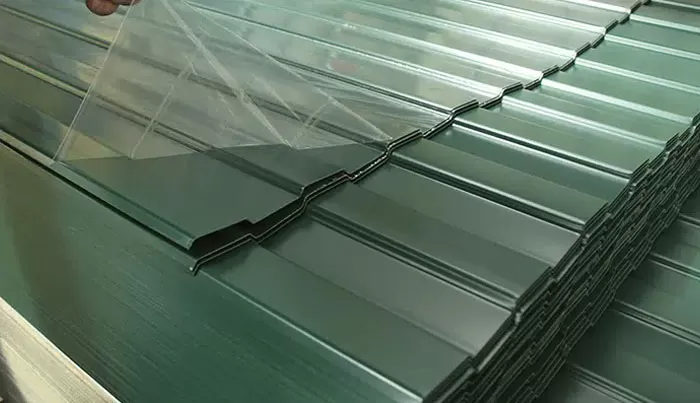
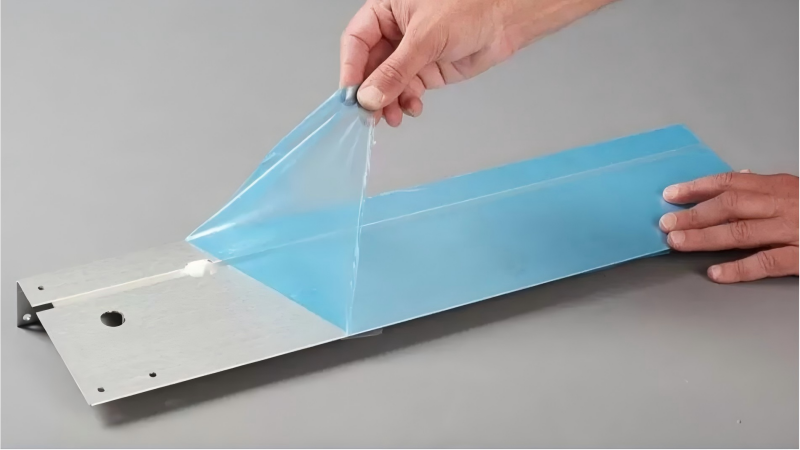
In high-precision industries—electronics, medical devices, aerospace interiors, and high-end fabricated metals—choosing the wrong protective film is rarely a “small” mistake. It can mean adhesive residue that ruins cosmetics, film shrinkage that misaligns a die-cut part, or contamination that triggers rework and returns.
The challenge: Polycarbonate (PC) film and Polyester (PET) film can look nearly identical, but they behave very differently under heat, stress, solvents, and high-speed processing.At Donlee (Performance Film and Tape), we’ve spent decades converting and testing surface protection constructions—coating, laminating, and precision slitting protective films for demanding OEM workflows across plastics, metals, and electronics.
Why Material Selection Is High-Stakes (Not a Commodity Decision)
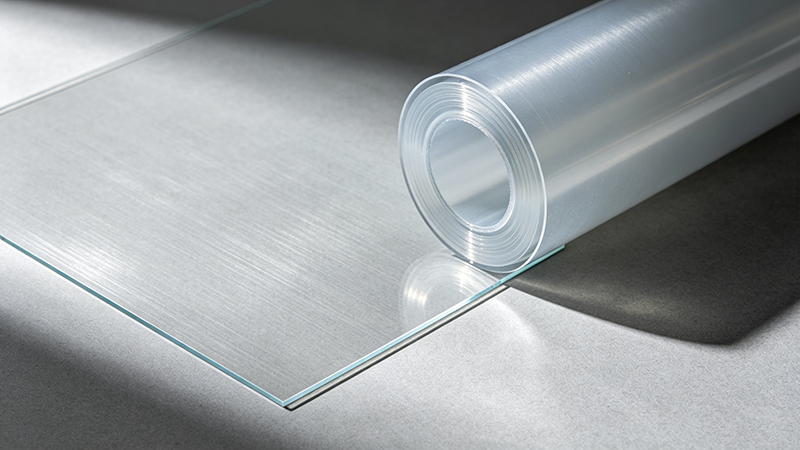
For a procurement manager or process engineer, a protective film is not “just a peelable layer.” It’s a temporary functional material system:
Carrier film (PC or PET, etc.) provides the mechanical backbone
Adhesive controls peel, residue, and clean removal window
Release liner (optional) enables die-cutting, automation, and waste stripping
When you’re qualifying a protective film manufacturer, you’re really qualifying their ability to match material science with your application engineering realities (heat cycles, surface energy, forming, and speed).
Polycarbonate (PC) Film: The “Tough” Choice
Polycarbonate film is typically selected when toughness, flexibility, and formability matter more than absolute dimensional stability.
Key Properties (Why Engineers Reach for PC)
High impact resistance (excellent for abuse during handling and assembly)
Optical clarity (common for overlays and view windows)
Good flexibility (useful when parts bend or need conformal laydown)
The Technical Edge: Glass Transition Temperature (Tg) and Formability
A practical way to think about PC: it maintains useful toughness and ductility across many real-world conditions, and it’s often preferred when the protective layer must survive more aggressive handling or forming steps.Tg matters because it signals when a polymer transitions toward “rubbery” behavior—affecting how it responds to heat exposure during manufacturing (lamination, forming, downstream processing).
Best Use Cases for PC Protective Film
Structural graphic overlays and nameplates
High-impact environments (assembly lines, field-install scenarios)
Protective layers used alongside forming/contouring steps
Pro Tip from the Converting Floor (Die-Cutting + 3D Forming)
If your workflow involves die-cutting followed by forming, PC’s formability can be a deciding factor—especially when you need the film to conform without edge-lift or cracking during shaping.
Polyester (PET) Film: The “Stable” Choice
PET (often recognized by the trade name Mylar®, among others) is a workhorse film when process stability, clean converting, and chemical resistance are the priority.
Key Properties (Why PET Wins in Production Environments)
High tensile strength (strong, crisp web handling)
Excellent dimensional stability (critical for registration)
Good chemical resistance (often better behavior around many solvents)
Cost-efficient at scale (frequently advantageous in high-volume programs)
The Technical Edge: Dimensional Stability Under Heat
PET is widely chosen when you cannot tolerate shifting, stretching, or shrinking that affects:
This is also why PET is commonly selected for high-speed, high-accuracy converting operations.
Best Use Cases for PET Protective Film
Electrical and electronics workflows (process protection and insulation-adjacent use cases)
Printed electronics and functional films (where registration matters)
Solar-related lamination and handling steps (dimensional control is key)
Manufacturing Insight: Why PET Loves Automation
PET’s stiffness and web stability typically improve runnability in:
Donlee's
PET protective film offerings are also engineered specifically for precision converting and die-cutting performance (flatness, stability, and clean removability), including cleanroom production options for contamination-sensitive applications.
Head-to-Head Comparison: The Engineers’ Table (PC vs. PET)
| Metric | Polycarbonate (PC) Film | Polyester (PET) Film | Winner (Typical Industrial Fit) |
|---|
| Impact resistance | Very strong, “tough” behavior | Strong but less impact-tough than PC | PC (high-abuse handling) |
| Dimensional stability | Good, but can be less stable than PET in heat cycles | Excellent for registration and tight tolerances | PET (precision + automation) |
| Formability / 3D conformance | Often superior for forming/contouring | More “springy/stiff”; less ideal for deep-draw forming | PC (formed parts) |
| Chemical resistance | Good, application-dependent | Often preferred where solvents/chemicals are present | PET (chemical exposure) |
| Die-cutting behavior | Can be excellent with right construction | Commonly preferred for crisp, stable die-cut webs | PET (high-speed die-cutting) |
| Typical cost position | Often higher | Often more cost-effective in volume | PET (high-volume programs) |
Note: Final performance depends heavily on thickness, adhesive type, surface texture, and process window—so validation testing beats assumptions every time.
The Role of the Adhesive: The Missing Link in “Residue-Free” Removal
A protective film is only as good as the adhesive system behind it.
Acrylic vs. Silicone Adhesives (Practical Differences)
Acrylic adhesives are common for general-purpose protection: good clarity, strong aging performance, broad availability.
Silicone adhesives can be the better choice for difficult substrates or higher-temperature requirements, and for situations where conventional adhesives struggle to release cleanly.
Donlee Advantage: Pairing the Right Film + Adhesive for Clean Removal
As a
protective film manufacturer and converter, Donlee focuses on matching:
carrier film (PC, PET, PE, PP)
adhesive chemistry and coat weight
target adhesion range and peel behavior
For example, Donlee’s PET protective films for die-cutting are offered with customizable adhesion and are designed for clean removal—a critical requirement in display, optical, and electronics workflows.
Selection Checklist: Which One Do You Need?
Use this quick decision filter during early qualification:
Do you need extreme impact resistance or a “tough” protective layer? → Polycarbonate (PC)
Are you working around harsh chemicals/solvents or need tighter registration stability? → Polyester (PET)
Is budget the primary driver for high-volume runs (with strong converting performance)? → Polyester (PET)
Does the part require deep-draw thermoforming or complex 3D forming? → Polycarbonate (PC)
If you’re unsure, the fastest path is usually a short trial plan: adhesion ladder + heat exposure + die-cut evaluation + residue inspection.
Testing Standards That Matter (How Engineers Validate Film Performance)
When comparing films across suppliers, it helps to align on recognized test methods:
ASTM D882 – tensile properties of thin plastic sheeting/films (store.astm.org)
ASTM D149 – dielectric breakdown voltage / dielectric strength (relevant for electrical insulation-adjacent use cases) (astm.org)
Conclusion: There's No “Superior” Film—Only the Correct Film for the Job
Polycarbonate and PET each win in different engineering realities:
Choose PC when toughness and formability protect your process.
Choose PET when dimensional stability, chemical resistance, and automated runnability protect your yield.
If you want a faster, lower-risk selection path, work with a specialist protective film manufacturer that can support trials, tuning, and precision converting.
FAQs
Is polycarbonate film more expensive than polyester (PET)?
Often, yes. At comparable gauges, polycarbonate (PC) typically costs more than PET—especially at volume. That said, PC can be the lower total-cost choice if its toughness and formability prevent handling damage, rework, or scrap.
Can PET film be used for outdoor applications?
Sometimes. PET can perform well outdoors in certain constructions, but outdoor success depends on the full stack-up (UV exposure, temperature cycling, adhesive aging, and the required removal window). Always validate with real-world exposure or accelerated weathering that matches your use case.
Which film is better for die-cutting?
In many high-speed converting environments, PET is preferred because of its stiffness and dimensional stability—especially when the film must hold tight tolerances, maintain registration, and strip cleanly during die-cutting.